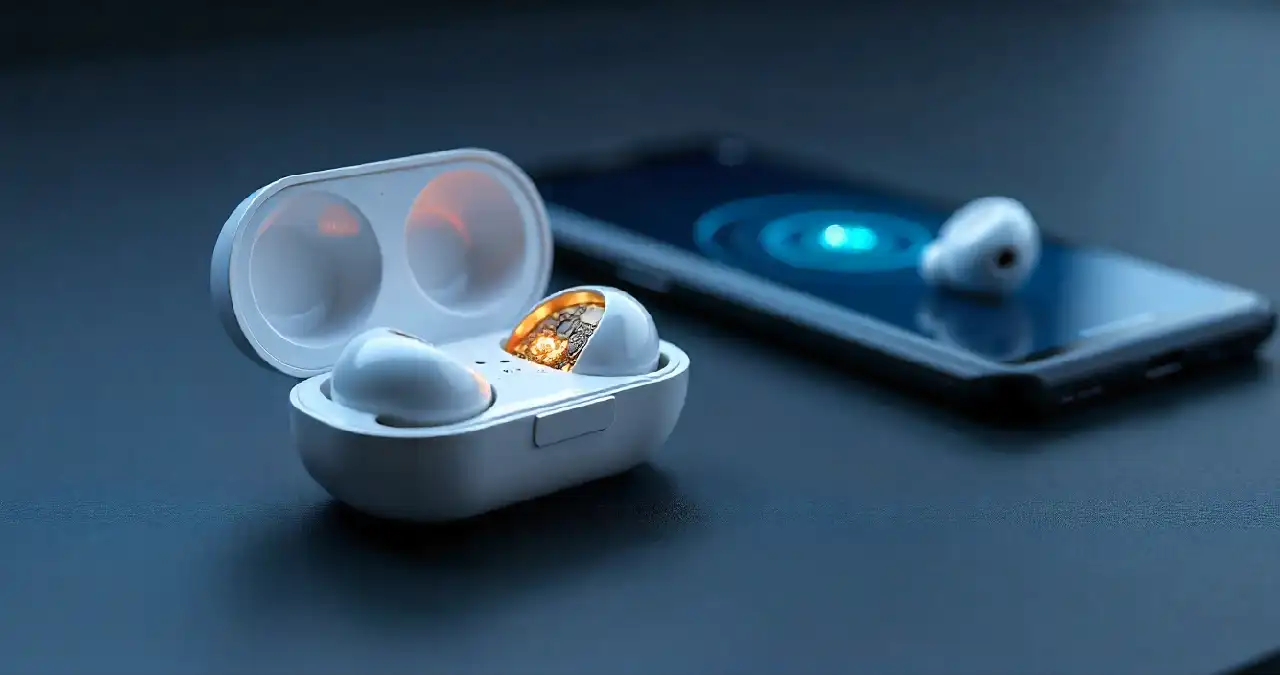
Wireless earbuds have come a long way, but they still face common frustrations: unstable connections, lag in audio syncing, and limited location-tracking features. Apple tackled this with its U1 chip in AirPods, giving users precise device-finding and seamless connectivity. But where does that leave Samsung?
If you’ve ever misplaced your earbuds or struggled with choppy Bluetooth, you know how disruptive it can be. In a crowded market, small innovations make or break user experience. With Apple already ahead, many Samsung fans have wondered — will their devices ever get a real competitor in ultra-precise wireless tech?
Enter the Samsung UWB earbuds patent. This newly filed design hints at a future where Samsung UWB earphones could rival, or even surpass, Apple’s ecosystem. Ultra-Wideband technology promises pinpoint location tracking, faster pairing, and smarter device interactions. The big question is: Could this be Samsung’s answer to Apple’s AirPods U1 chip?
What is UWB Technology?
Ultra-Wideband, or UWB, is a short-range wireless communication protocol that operates at very high frequencies. Unlike Bluetooth and NFC, UWB isn’t just about transferring data — it’s about precision.
- Bluetooth: Great for audio streaming but struggles with exact location tracking.
- NFC: Useful for quick tap-to-pay actions but limited in range and speed.
- UWB: Combines the best of both — ultra-fast data exchange, centimeter-level location accuracy, and almost zero latency.
This makes UWB ideal for tasks beyond music playback. It enables:
- Precision tracking — find devices in real time, even in crowded spaces.
- Faster data transfer — move files securely and quickly.
- Low-latency connections — vital for immersive AR/VR experiences and seamless audio.
In short, UWB brings intelligence to wireless connections, turning simple earbuds into powerful multi-device controllers.
Samsung’s UWB Earbuds Patent Explained
Samsung quietly filed a UWB earbuds patent that lays the foundation for its next-gen audio products. While the exact filing date varies across jurisdictions, reports suggest the documentation was submitted in late 2024, placing it firmly in Samsung’s 2025–2026 innovation cycle.
The patent highlights:
- Integrated UWB modules within earbuds.
- Smart positioning systems — allowing earbuds to communicate with nearby Galaxy devices and IoT products.
- Enhanced audio delivery with low latency for lossless sound.
- Security protocols leveraging UWB’s encrypted, short-range transmissions.
If patent sketches are any indication, Samsung may integrate tiny UWB antennas into the Galaxy Buds lineup, potentially starting with a premium “Pro” edition.
This filing is not just about sound quality — it’s about redefining how earbuds interact with the entire Galaxy ecosystem.
Potential Features of Samsung UWB Earbuds
Samsung’s UWB earphones could deliver more than incremental upgrades. Here’s what the patent suggests and what users might expect:
Seamless Device Tracking with SmartThings Find
UWB could supercharge Samsung’s SmartThings Find, making it easier to locate lost earbuds with pinpoint accuracy — even under a couch cushion or inside a gym bag.
Advanced Spatial Audio & AR/VR Integration
Expect richer 3D spatial audio that adapts to your head movement. Combined with Samsung’s XR/VR strategy, this could make Galaxy Buds a gateway to immersive entertainment.
Instant Connectivity Across Galaxy Ecosystem
Pairing could become instant and frustration-free. Place your UWB earbuds near a Galaxy phone, tablet, or laptop, and watch them connect in milliseconds.
Enhanced Security & Data Sharing
Unlike Bluetooth, UWB’s encrypted, short-range communication ensures safer data transfers — opening doors to quick file sharing or secure authentication via your earbuds.
Together, these features position Samsung’s UWB earbuds as more than audio devices — they’re wearable smart hubs.
How UWB Could Change the Future of Earbuds
The implications of UWB go far beyond music playback.
- Precision location in crowded places: Imagine never losing your earbuds again, even in busy airports or gyms.
- Personalized soundscapes: Earbuds could adapt audio dynamically based on your environment, from noisy streets to quiet rooms.
- AR audio navigation: Walking directions could play directly in your ears with spatial awareness.
- Smart home control: Adjust lights, unlock doors, or trigger appliances with a simple head movement or tap.
In short, UWB could transform earbuds from accessories into interactive, location-aware devices.
Samsung vs Apple – The Battle of UWB
Apple has already rolled out its U1 chip in AirPods Pro, iPhones, and AirTags. This allows features like Find My precision tracking and AirDrop directionality.
Samsung’s UWB earbuds patent suggests a counter-strategy: integrating UWB directly into the Galaxy Buds line, while expanding SmartThings Find to compete with Apple’s ecosystem.
Market implications are huge:
- For Samsung: A chance to lead Android in audio innovation.
- For Apple: Renewed competition that pressures the AirPods lineup.
- For consumers: Faster adoption of UWB as the industry standard.
The earbuds market could see its most significant shake-up since Apple first introduced AirPods.
Challenges & Limitations of UWB in Earbuds
Despite the excitement, UWB integration won’t be seamless. Key challenges include:
- Cost of implementation: UWB hardware adds expense, potentially raising retail prices.
- Battery consumption: Maintaining UWB signals may drain small earbuds faster.
- Adoption barriers: Widespread benefits rely on more UWB-enabled devices across the ecosystem.
These hurdles mean UWB earbuds may start as premium models before reaching mass adoption.
Release Timeline & Market Expectations
While no official date has been confirmed, industry watchers expect UWB earbuds Samsung to arrive in late 2025 or early 2026, aligning with Samsung’s Galaxy device launches.
They’ll likely debut as part of the Galaxy Buds Pro series, targeting early adopters before trickling down to mainstream models.
Consumer expectations are high, especially among users seeking:
- Smarter tracking with lossless audio over UWB.
- AR/VR-ready wireless experiences.
- A seamless Galaxy ecosystem rivaling Apple’s AirPods + U1 chip integration.
If Samsung delivers, UWB earbuds could set a new benchmark for wireless audio.
Conclusion
The Samsung UWB earbuds patent could mark the beginning of a new audio era. With Samsung UWB earphones, the company isn’t just improving sound — it’s reimagining how earbuds interact with people, devices, and spaces.
If the technology lives up to its promise, UWB may soon become a must-have feature in premium audio. Whether you’re an audiophile, a Galaxy power user, or just someone tired of losing earbuds, this innovation could redefine your everyday listening.
Final Thought: Samsung’s UWB earbuds patent may signal the start of a new era in spatial audio and smart connectivity.
FAQs
What does Samsung’s UWB earbuds patent cover?
It covers integrating UWB modules into earbuds for precision tracking, low-latency audio, and secure connectivity.
How is UWB better than Bluetooth?
UWB offers centimeter-level tracking accuracy and faster, more secure data transfer compared to Bluetooth.
When will Samsung release UWB-powered earbuds?
Speculation points to 2025–2026, though no official date is confirmed.
Will they work only with Galaxy devices?
Most features will likely be optimized for the Galaxy ecosystem, though basic functions may remain cross-platform.
How will this affect AirPods users?
It introduces competition, giving consumers more options and potentially pushing Apple to enhance its U1 chip integration further.