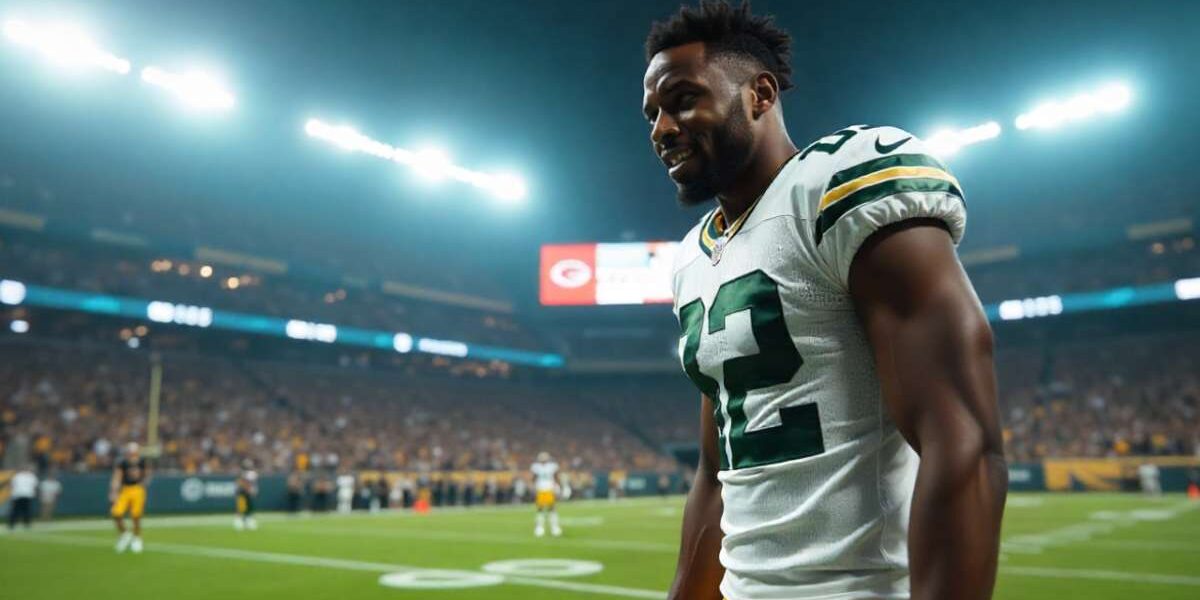
Davante Adams is one of the most accomplished wide receivers of his generation — a playmaker who earned Pro Bowls, All-Pro nods, and huge moments, especially during his time in Green Bay. He’s not just known for route-running and catches; he’s known for competitive fire and a personality that doesn’t hide from rivalries. That background helps explain why a pointed comment about the Chicago Bears lands with so much weight.
A brief career snapshot
Adams rose to stardom in Green Bay after being drafted in 2014. Over the years he built a reputation as Aaron Rodgers’ favorite target, then moved around the league and continued to perform. That career arc — from draft pick to superstar and veteran — gives his words added resonance. People remember the games, the numbers, and the attitude, so when he “takes a swipe” at a rival, it rings true because he’s earned the right to speak from experience.
The Packers-Bears rivalry: why it matters
Packers vs. Bears is one of the oldest, nastiest rivalries in American sports. For decades it has shaped fan identity in the Midwest. When a former Packer like Adams talks about the Bears, he’s not just poking an opponent — he’s touching a century-old storyline that fans still care about like a family feud. That historical weight magnifies even a single line tossed in an interview.
The swipe: what he actually said
The exact quote and where it happened
In a recent media appearance, Adams was asked whether he would ever play for the Chicago Bears. His answer? A blunt “No. Never.” — delivered without hesitation. That exchange came on a player-hosted show/interview setting where candid answers are common, and Adams doubled down when the question was posed again. The clarity and finality of the response made it headline-friendly.
Tone and delivery — more than words
A short phrase can carry attitude that punctuation alone can’t. Adams’ delivery — confident, unflinching, and a little playful — makes the swipe feel like a closing of a chapter rather than a thrown punch. The tone matters: playful in some ears, disrespectful in others. Either way, it creates a soundbite that fans and media can chew on for days.
Why players throw shade: psychology of rivalries
Pride, identity, and team history
Players inherit team identity. For many who came up in Green Bay, the Bears aren’t just another opponent — they’re the “other” that defines your team by contrast. Saying “I’ll never play for them” is a way to signal loyalty to that identity, like slapping an invisible jersey across your chest.
Motivation and competitive fuel
Comments like Adams’ are often just competitive fuel. They cement a mental edge: if you publicly dismiss a rival, you set a standard for yourself to back it up. The criticism becomes a tiny motivational engine: prove it on the field, then enjoy the bragging rights.
Trash talk as a performance tool
Trash talk isn’t always about ego. It’s also a tool players use to create narratives that energize teammates and intimidate opponents. Think of it like strategic thunder before the storm — sometimes it’s meant to unsettle, sometimes to entertain, and sometimes to focus attention where you want it.
Adams vs. the Bears: the on-field facts
Career numbers and memorable games (context, not exhaustive stats)
When you hear a veteran call out a rival, it’s useful to remember the scoreboard. Adams had several standout games against Chicago during his Green Bay tenure; those performances feed the swagger. While specific numbers vary by season, the narrative is consistent: he was a dependable nightmare for Bears defenses, and those memories shape how both fans and players interpret his comments.
Signature moments that feed the narrative
There are memorable catches, clutch plays, and those afternoons when the scoreboard confirmed the trash talk. Those moments live in highlight reels and in the memories of fans, which is why a short quote like “Never” can feel backed by on-field proof rather than empty bravado.
Media and social reaction
Fans, clips, and viral moments
Soundbites travel fast. A crisp line from Adams becomes a clip, then a meme, then a dozen think-pieces. Fans either cheer it as honesty or bemoan it as spite. Either way, the internet amplifies the effect and turns a short interview remark into a talking point for days. Outlets repost and fans retweet, and suddenly an offhand remark becomes part of the narrative arc of the season.
How reporters frame the story
Journalists will often decide whether the swipe is a “light moment,” a headline-grabber, or evidence of lingering rivalry bitterness. Reporters’ frames shape public understanding: is this a retired rivalry taunt, or a real jab meant to sting? The frame can change the tone from playful to provocative.
What the swipe means for the Bears
Locker-room and franchise optics
From a Bears perspective, a former rival dismissing them publicly isn’t flattering — but franchises are built on depth, not soundbites. Coaches care about tape and playbooks; players care about getting better. Still, persistent narratives about being disrespected can affect recruiting and the locker-room mentality in subtle ways: motivation to prove critics wrong is powerful.
Recruiting, perception, and reputational impact
In recruiting or free agency conversations, public perception matters. A reputation as a “team people don’t want to join” can be damaging, even if unfair. That said, one offhand comment rarely changes the long-term calculus for top players and coaches.
What the swipe means for Adams
Brand-building and legacy
For Adams, these moments layer into the legend. Big plays, clutch catches, and memorable quotes all feed the legacy narrative. Saying he’d “never” play for the Bears slots into a personality profile: fiercely loyal, unabashedly competitive, and media-savvy. Those traits can help with post-career branding and media roles.
Hall of Fame narratives and rivalry lore
When Hall of Fame voters and fans talk about a player’s career, they often mix stats with storytelling. Rivalry domination — backed up by memorable lines — becomes part of the mythos that keeps a player’s name alive in debates and documentaries.
When comments backfire: risk and reward
Fueling motivation in the opposition
There’s a risk that calling out a rival publicly lights a fire under them. If your comments give the other team extra motivation, you might have handed them a chip to grind. Sports history is full of examples where perceived slights turned into revenge games.
Media missteps and PR landmines
A tone-deaf comment or an ill-timed swipe can stick. Players must balance authenticity with nuance; sometimes a bit of diplomacy would save headlines and avoid igniting a full-blown controversy.
How other players and coaches respond
Respect, heat, and diplomatic replies
Often, teammates will back a statement if it’s team-oriented or defend a teammate if it’s personal. Coaches frequently diffuse tension with measured replies — reminding fans the focus is on the next game. Opponents sometimes clap back on the field rather than in the media, letting performance be the retort.
Examples of cooling the fire
Veteran responses usually fall in a few patterns: humorous deflection, respectful rebuttal, or complete dismissal. The smart play for many is to use the moment for motivation rather than escalation.
The bigger picture: why rivalries keep the NFL alive
Storytelling, ratings, and fan culture
Rivalries are story engines. They create narratives that carry across seasons, drive ticket sales, generate headlines, and keep fans emotionally invested. A single offhand comment like Adams’ feeds that engine, giving networks and social platforms content to replay and debate.
Rivalry marketing for teams and the league
League-level marketing loves this stuff. Heated lines and memorable clashes create promotional hooks. Whether teams like it or not, the drama is often good for business — and that’s part of the calculus behind why some players lean into it.
How to read a coach/player quote like this (practical tips)
Separate the emotion from long-term significance
Hit the pause button before treating a oneline quote as world-shaking. Ask: Is this a moment, or is it part of a pattern? Often it’s the former. Context and track record matter more than a single clip.
Check timing, platform, and context
Was it said on a casual player-run show, a heated press conference, or a locker-room rant? Who asked the question? Where it was said shapes how deliberate the comment was, and how much weight it should carry.
Closing thoughts
Davante Adams’ line about never playing for the Bears is part swagger, part identity, and part storytelling. It’s a short sentence loaded with decades of rivalry, personal history, and media dynamics. For fans it’s fuel for debate and for Adams it’s another memorable moment that joins a long list of career highlights. For teams and coaches it’s a flash of noise to be managed — a reminder that in sports, what’s said matters, but what happens on the field matters more.
FAQs
Yes — when asked in an interview if he would ever play for the Chicago Bears, Adams replied bluntly that he would not, saying “No. Never.” The quote was widely reported in sports media.
Tone is subjective. Many interpreted it as candid loyalty to his former team and competitive banter; others read it as a pointed dismissal. Context — the interview format and Adams’ delivery — suggests a mix of both.
It can. Public dismissals sometimes motivate opponents, influence fan sentiment, and create media narratives that teams must manage. However, performance and culture inside the locker room usually carry more weight long-term.
Absolutely. Rivalry-driven comments are common in sports; players use them to show loyalty or to spark a competitive edge. Historically, such moments are part of the colorful fabric of sport.
In later comments he has at times acknowledged fan interactions and reduced animosity, saying he doesn’t “hate the Bears anymore” as perspectives evolve over time. That shows how public positions can soften with time and changing contexts.